AMD Ryzen 5 laptop Plenty of cores for your money
An AMD Ryzen 5 laptop sits where an Intel Core i5 does, but often gives you more cores for the same money and stronger built-in graphics.

Lenovo ThinkPad T14 Gen 1AMD Ryzen 5 PRO 4650U
Features

Lenovo ThinkPad T14 Gen 2aAMD Ryzen 5 PRO 5650U
Features

Lenovo ThinkPad T14 Gen 1AMD Ryzen 5 PRO 4650U
Features

Lenovo ThinkPad T14 Gen 1AMD Ryzen 5 PRO 4650U
Features

Lenovo ThinkPad T14 Gen 1AMD Ryzen 5 PRO 4650U
Features

Lenovo ThinkPad T14 Gen 3AMD Ryzen 5 PRO 6650U
Features

Lenovo ThinkPad X13 Gen 2aAMD Ryzen 5 PRO 5650U
Features

Lenovo ThinkPad T14 Gen 1AMD Ryzen 5 PRO 4650U
Features
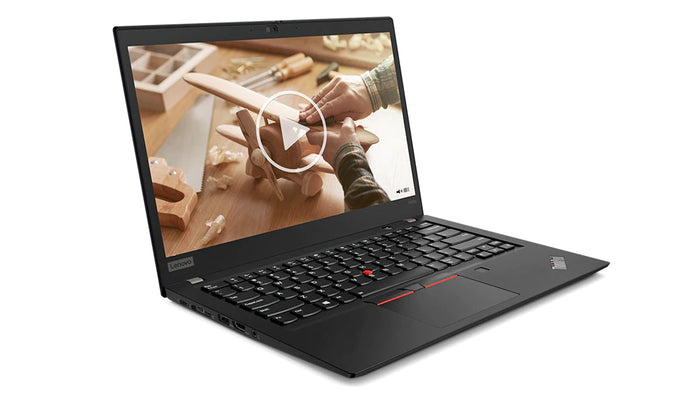
Lenovo ThinkPad T495AMD Ryzen™ 5 3500
Features
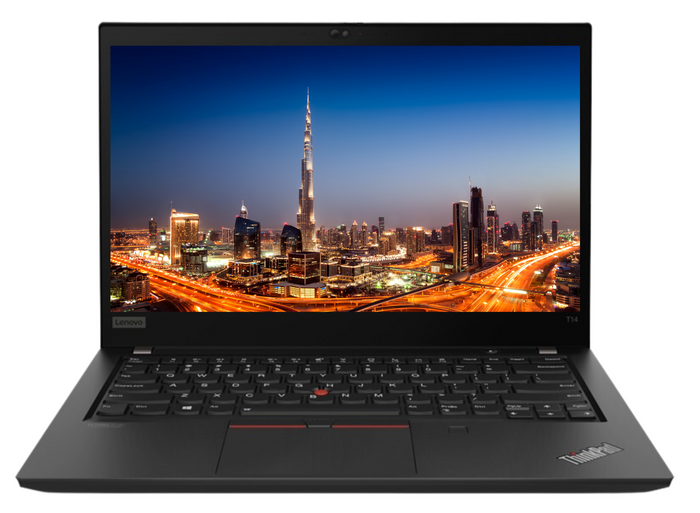
Lenovo ThinkPad T14 Gen 1AMD Ryzen™ 5 4650U
Features
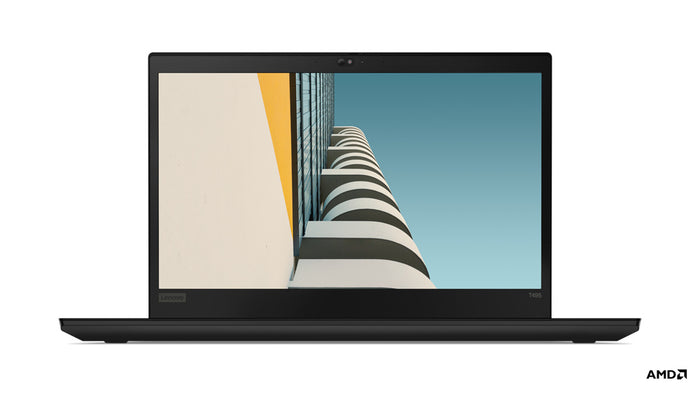
Lenovo ThinkPad T495AMD Ryzen 5 PRO 3500U
Features
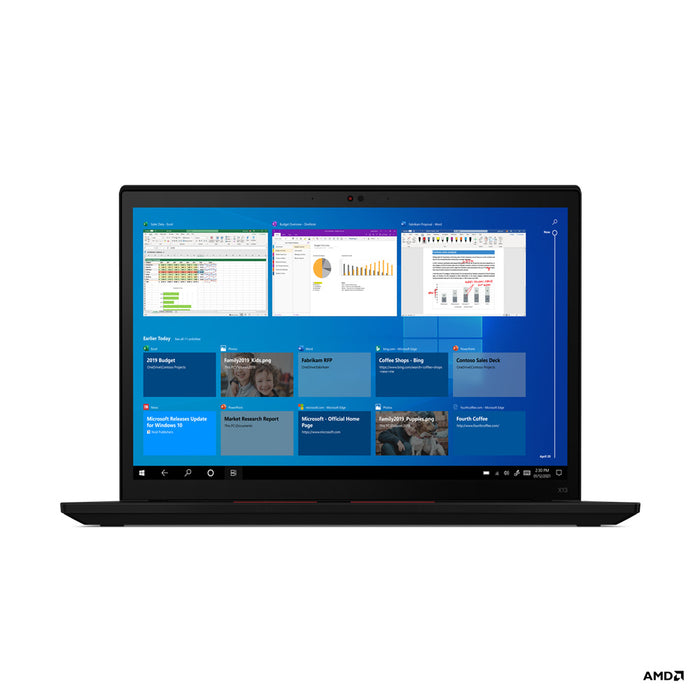
What makes a Ryzen 5 strong.
Where the power sits, how it compares to Intel and what to look at.
The Ryzen 5 is AMD's middle level and the counterpart to an Intel Core i5. Often six cores where Intel has four, and a stronger built-in Radeon graphics part. That makes it good at work made up of many separate tasks: lots of tabs, a video call and something syncing in the background.
The first digit is the series: a Ryzen 5 5650U comes from the 5000 series, a 3500U from the 3000 series. The newer it is, the more frugal and faster.
Multitasking runs smoothly and the laptop stays quiet, because the extra cores share the work instead of forcing one core to full power. For images on an external screen, video playback and light photo editing, the stronger Radeon part lends a hand.
The limit sits in the same place as on an i5: work that keeps calculating for minutes, such as exporting video or large renders. There a Ryzen 7 or an i7 belongs.
Business models out of company lease cycles, with a solid chassis, a good keyboard and parts that can be replaced. AMD appears less often than Intel in business ranges, so the choice is narrower than with an i5, but this is the AMD level with the best availability.
Filter alongside on memory, screen size and grade. At this level 16 GB of memory is the nicest choice, because that is what lets those extra cores actually do something.
For office work they are level. The Ryzen 5 often gives more cores and better graphics performance for the same money; the i5 appears in far more business models, so the choice there is wider and you sooner find exactly the size and grade you are after.
Compare the levels side by side on choose a laptop by processor.
Questions? Answers.
AMD Ryzen 5 offers an excellent balance of price and performance. The processor delivers strong performance across several cores at an attractive price, which makes it popular with business users who watch performance per pound.
Yes, AMD Ryzen 5 processors perform very well at multitasking. Several applications at once, video conferencing and office work all run briskly. Combined with 16 GB of RAM, a Ryzen 5 makes a very capable business laptop.
Ryzen 5 and Intel Core i5 are comparable tiers. In practice Ryzen 5 generally offers more computing power per pound, while Intel's i5 works a little more widely with business software and IT systems. Both are excellent choices.
AMD Ryzen 5 processors with built-in Radeon graphics perform very well on lighter graphical tasks. For heavy 3D rendering or 4K video editing, a dedicated graphics card is the right addition.
Modern AMD Ryzen 5 processors have improved considerably in efficiency. The U-series chips offer good battery life in daily use, comparable to Intel alternatives in the same class.
Yes. An AMD Ryzen 5 laptop stays relevant for 5 to 7 years in normal use. The processor architecture leaves enough headroom for software still to come.
A Ryzen 5 laptop is ideal for professional users who multitask every day and want good performance at an attractive price. It is one of the best choices in the mid-range business laptop market.
Yes. AMD Ryzen 5 laptops are proven hardware for professional use. At Hej Refurbished they are tested thoroughly and supplied with warranty.
Usually six cores handling twelve tasks side by side, where an Intel Core i5 from the same period often has four. In the older 3000 series it is four cores. You notice those extra cores with many programs at once and on work that can be shared out; with one program at a time you do not.
The first digit is the series and therefore roughly the generation: a Ryzen 5 5650U comes from the 5000 series, a 4500U from the 4000 series. The letter U means frugal and sits in the thin business models; an H may draw more and is faster but costs battery life. For office work you want a U.
For photos, yes. The six cores and the stronger built-in Radeon part come into their own there, and Lightroom or Photoshop run nicely on it with 16 GB of memory. For video editing and renders that run long, you will sit more comfortably with a Ryzen 7 or an i7.
The U versions are frugal and will get through a day of office work; the 5000 series does this better than the older series. The cores sharing the work helps: no single core has to run at full power, so it stays cool and quiet. On most models the battery can be replaced.
For images on two external screens, video playback and photo editing, no: the built-in Radeon part handles that and is stronger than Intel's at this level. A dedicated card is what you need for 3D and renders; if that is you, have a look at laptops with a dedicated graphics card.
For one or two virtual machines alongside your ordinary work it goes well, because the six cores share out nicely. Do add 16 GB of memory, since with virtualisation that is the limit sooner than the processor. For more machines at once, a Ryzen 7 or i7 with 32 GB is the starting point.